Dead Target: Offline Games 3D
- 4.6
- Rating
- 100.00M
- Installs
- Free
- Price

 Analysis by App-foxy
Dead Target: Offline Games 3D is the kind of action game I open when I want immediate shooting rather than a long tutorial or a complicated team setup. I point, fire, watch a zombie drop, and move on to the next threat. That directness is its main attraction, but it also explains the game’s limits: this is a focused mobile FPS experience, not a deep military simulator or a story-heavy adventure.
Developed by VNGGames Studios, the game has built a very large audience since its release on June 16, 2014. It is free to install, rated Mature 17+, and available for devices running Android 6.0 or later. Its current version is 4.181.0, so it is clearly a long-running title rather than a short-lived experiment. I found that useful context because the game feels designed around repeat visits: short bursts of combat, quick rewards, and a strong temptation to start one more mission.
The store page shows a 4.6 average from around 2.4 million ratings, with over 100 million installs. Those figures do not automatically make a game enjoyable, but they do match my impression that Dead Target has an easy-to-understand loop that works well on a phone. The important question is whether that loop still holds your attention after the first exciting sessions.
You May Also Like

 AccuWeather: Weather Radar
AccuWeather Review: A Quick, Clear Forecast for Everyday Decisions
For everyday plans, the best forecast is the one you can understand quickly. AccuWeather makes rain timing, radar, and local conditions easy to act on, with a few trade-offs.

 Hill Climb Racing
Why Hill Climb Racing Still Turns Crashes Into One More Run
A tiny car, a bumpy hill and one more upgrade: Hill Climb Racing keeps resurfacing because its simple chaos makes every near-miss feel personal.

 AliExpress - Shopping App
AliExpress Makes Global Shopping Feel Personal, but Shoppers Bear the Risk
AliExpress turns a global marketplace into a pocket-sized discovery engine. Its reach is useful, its shopping loop compelling, and its trade-offs easy to miss.

 Lords Mobile: Kingdom Wars
Lords Mobile Is a Kingdom-Building Routine, Not a Quick Match
A case-by-case verdict on the building, battles, device demands, and social commitments that make Lords Mobile rewarding for some players and exhausting for others.

 PDF Scanner app - TapScanner
TapScanner Makes Paperwork Easier to Capture, Check, and Share
TapScanner makes scanning with a phone feel less like a rescue operation and more like a dependable step in getting work done. Its capture tools are useful, though not flawless.

 Block Blast!
 Shows How Much a Puzzle Game Can Leave Out
A quiet grid game shows why puzzle players increasingly value instant clarity, repeatable skill and low-pressure play—and where the genre still needs to catch up.
More From Our News Desk
View All News


From the first shot to the first reward
I look at the opening stretch as a test of whether the shooting and reward loop earns another visit, not as a reason to rush through every option. Paying attention to what felt difficult before spending a reward can make the next attempt more deliberate. The next section considers how to approach that progression without letting quick action turn into automatic spending.
The opening action is deliberately simple
The best way to understand Dead Target is to ignore the zombie theme for a moment and look at what happens during a normal encounter. You enter a combat situation, identify the approaching targets, aim across the screen, and fire. The game puts the emphasis on immediate reaction, so I never felt that I needed to learn a large control system before enjoying the first few minutes.
That simplicity is especially helpful on a phone. Touch controls can make traditional shooters uncomfortable, particularly when movement, aiming, weapon changes, and abilities all compete for space. Here, the action is more contained. I can concentrate on placing shots and reacting to the enemies in front of me instead of wrestling with a virtual gamepad.
The first useful habit is to avoid treating every zombie as an identical target. When several enemies are visible, I get better results by quickly judging which one is closest to causing trouble and which one can wait. That small decision gives the shooting more purpose. It is not just about tapping as fast as possible; it is about choosing where the next burst of attention should go.
I also recommend playing the first few encounters with the sound on, if your surroundings allow it. Audio feedback makes each shot and hit feel more distinct, and that helps me judge whether I am actually controlling the situation or simply emptying ammunition into a crowd. In a game built around repeated attacks, small signals like these make the difference between deliberate play and frantic tapping.
Why the shooting feedback keeps the loop moving
Dead Target’s strongest quality is its feedback rhythm. I shoot, receive an immediate visual response, clear a threat, and get a brief sense of progress before the next target demands attention. That rhythm is easy to understand and satisfying in short sessions because the game rarely asks me to wait long for something to happen.
The zombies provide a clear reason to keep watching the screen. A target that is still standing remains a problem, while a target that falls confirms that my aim and timing worked. This is a basic design choice, but it is exactly what makes the game accessible. I do not need to interpret a complicated battlefield to know whether I am succeeding.
At the same time, the straightforward structure can become repetitive. The first sessions benefit from surprise and speed, but the novelty of shooting another wave eventually weakens if I am not working toward a personal goal. I found the game more enjoyable when I entered a session with a concrete purpose, such as improving my accuracy, finishing a difficult encounter, or earning enough resources for a specific upgrade.
That is one of the less obvious lessons here: the game does not always create enough meaning on its own. The action is immediate, but long-term motivation often comes from the target I set before starting. Without that extra intention, a few missions can blur together.
How the reward changes the next attempt
Combat would feel empty if every completed encounter simply disappeared. The reward stage gives each victory a practical consequence, whether that means improving the way I approach the next fight or giving me a reason to return after closing the app. The important part is not the reward animation itself; it is the decision that follows it.
After a successful run, I usually ask whether I should improve my current setup or save resources for a more meaningful change. Spending everything immediately can make the next encounter feel easier for a moment, but holding something back can be useful when I know a harder stretch is coming. That trade-off is where the game becomes more than a reflex exercise.
New players should resist the urge to treat every reward as permission to rush forward. A better workflow is to complete a few encounters, notice what is causing failures, and then spend resources in response to that problem. If targets are overwhelming me, I need a different approach from the one I would use if I am simply missing too many shots. This sounds obvious, but it prevents wasted upgrades and makes progress feel more controlled.
The free-to-play structure also affects how I evaluate rewards. In-app purchases range from $0.49 to $99.99 per item, so the game can present a wide range of optional spending choices. I would not recommend buying anything during the first session. Play long enough to decide whether the shooting loop itself is enjoyable; purchases cannot fix a core loop that does not suit your taste.
For players who enjoy collecting progress and improving a combat setup, the reward stage can be a strong reason to continue. For players who prefer a complete experience with no pressure to consider spending, the free-to-play model may feel less comfortable than a paid action game. That difference matters more than the zombie setting.
The reset is part of the appeal
Every session eventually ends, either because I finish the immediate objective or because the pressure becomes too much. The reset is not just a stopping point. It gives me a chance to assess what happened, collect the result, and decide whether the next run should be approached differently.
I like this structure for everyday play. If I have a few spare minutes while waiting for an appointment, I can start a session without committing to a long narrative chapter. If I have more time in the evening, I can continue through several encounters and pay closer attention to progression. That flexibility is one of the game’s most practical strengths.
A realistic example is a short commute or a break between tasks. I might open the game intending to play only one encounter. The first action is quick, the shooting produces constant feedback, and the reward gives me a reason to try another. If the second session ends badly, the reset still feels clean: I know what went wrong and can return later instead of feeling that I have lost a large block of progress.
That same reset can also expose the game’s weakness. Because the action is built for repetition, I may find myself starting another session automatically rather than because I genuinely want to play. The “one more” feeling is effective, but it is worth noticing. If the loop becomes a habit without enjoyment, closing the game is the better choice.
Where it fits among mobile shooters
Compared with multiplayer shooters, Dead Target is a calmer and more predictable choice. I am not depending on teammates, waiting for a match, or dealing with opponents whose skill can change the entire experience. That makes it suitable for solo players who want action on demand and do not care about competitive rankings or social coordination.
Compared with large open-world zombie games, it is much more focused. I do not open it for exploration, branching conversations, or a broad survival sandbox. I open it for the shooting itself. That focus helps the game work on a mobile device, but it also means that anyone looking for deep wandering and emergent survival stories should choose a different kind of game.
It also differs from slower tactical shooters. Dead Target rewards quick recognition and consistent firing more than careful planning across a large map. Players who enjoy managing a squad, conserving every resource, or studying realistic weapon behavior may find the experience too direct. Players who want a compact action loop will probably appreciate that it does not bury the fun under unnecessary complexity.
My advice is simple: choose this game when your priority is a solo zombie FPS that gets to the action quickly. Skip it if your ideal mobile shooter is primarily competitive, story-driven, exploratory, or free from recurring upgrade decisions.
Practical ways to get more from each run
My first tip is to separate aiming practice from progression pressure. During easier encounters, I focus on placing accurate shots rather than firing continuously. This gives me a better feel for the controls and makes later, more crowded situations less stressful. It is a small change, but it turns early missions into preparation instead of disposable content.
Second, I avoid spending rewards simply because the game makes the option available. I wait until I can identify a specific weakness in my current performance. This creates a more useful connection between action and reward: the fight reveals the problem, the upgrade addresses it, and the next session tests whether the decision helped.
Third, I use the reset as a review point. When I fail, I ask whether the cause was poor target priority, rushed aiming, or advancing without enough preparation. That question is more valuable than immediately restarting. It also prevents frustration because the failed session produces information instead of feeling completely wasted.
Fourth, I keep sessions short when my attention is divided. Fast shooting can be enjoyable, but it is easy to make careless choices while multitasking. If I am tired or distracted, I would rather stop after one encounter than spend resources trying to recover from mistakes that had nothing to do with the game’s difficulty.
Who will enjoy it, and who should pass
I would recommend Dead Target to players who want a free action game with a clear zombie theme, immediate shooting, and a progression loop that works in small pieces. It is a good fit for someone who enjoys repeating a familiar structure while gradually improving performance or equipment. It also suits players who prefer solo play and do not want the pressure of live competition.
The Mature 17+ rating is important to take seriously. This is not a family-friendly zombie game designed for young children. Adults who are comfortable with violent action are the natural audience, while parents looking for a casual game to share with children should look elsewhere.
I would be more cautious recommending it to players who dislike repetition or in-app purchases. The game’s appeal depends on returning to a similar action pattern, and the free-to-play design can be a source of friction for anyone who wants a fully self-contained purchase. The wide purchase range means I would also suggest checking your spending habits before settling into the loop.
Device compatibility is reasonably broad because the minimum requirement is Android 6.0, but that does not guarantee the same experience on every phone. On an older device, I would close other demanding apps, keep the screen clean, and avoid judging the game from a single rushed session. Touch response and comfort matter a lot in a shooter, so the best test is whether aiming feels dependable on your own handset.
The loop verdict
What keeps bringing me back is the clean sequence: take the first shot, react to the feedback, earn a reward, reset, and decide whether another session has a purpose. Dead Target does not need a complicated explanation because its central action is immediately readable. That is both its biggest strength and its clearest limitation.
When I want a quick solo FPS session against zombies, the game delivers a convenient burst of action. It is easy to start, simple to understand, and flexible enough for a short break. Its long history and large player base also suggest that this compact formula has remained appealing to many mobile players.
Still, I would not call it the best choice for every shooter fan. The repetition can wear thin, the free-to-play economy deserves restraint, and players seeking multiplayer competition or open-world survival will find more suitable alternatives elsewhere. My honest recommendation is to try it for the shooting loop, not for promises of endless variety. If the first few reward-and-reset cycles make you want to improve your next run, Dead Target: Offline Games 3D is worth keeping installed. If you are already looking for a reason to escape the next session, the game has probably shown you exactly where its appeal ends.
FAQs for Dead Target: Offline Games 3D
01Can Dead Target: Offline Games 3D be played without an internet connection?
Yes, Dead Target: Offline Games 3D is designed primarily as an offline zombie-shooting game, so you can play its main missions without a constant internet connection. This makes it suitable for travel or areas with unreliable network coverage. However, some features, updates, advertisements, cloud-related functions, or promotional rewards may require you to reconnect occasionally.
02Is Dead Target: Offline Games 3D free to download and play?
The game is generally free to download and play, allowing you to begin the campaign and use its basic weapons without paying upfront. Like many mobile action games, it may include optional in-app purchases for currency, weapon upgrades, supplies, or other advantages. Progress is possible without spending money, although patience may be needed when missions become more demanding.
03What kind of gameplay does Dead Target: Offline Games 3D offer?
Dead Target focuses on fast-paced first-person zombie shooting with a mission-based structure. You face groups of undead enemies, aim for critical hits, unlock and upgrade weapons, and complete objectives across dangerous environments. The controls are built for touchscreens and are relatively easy to understand, while later stages add stronger enemies and greater pressure.
04Does Dead Target: Offline Games 3D require a powerful Android or iPhone?
The game is optimized for mobile devices, but its 3D graphics, effects, and large zombie encounters can still place a noticeable load on older phones. A relatively recent device with enough free storage and updated operating-system support should provide a smoother experience. On weaker hardware, you may encounter longer loading times, reduced visual quality, heating, or occasional performance issues.
05Are there advertisements or in-app purchases in Dead Target: Offline Games 3D?
Yes, players should expect monetization features such as advertisements and optional in-app purchases. Ads may appear between activities or be offered in exchange for extra rewards, while purchases can provide currency, equipment, upgrades, or other conveniences. You do not necessarily need to buy anything to enjoy the game, but free players may experience slower progression and more frequent interruptions.
Pros
- Playable offline
- making it convenient for travel or areas with limited internet.
- Fast-paced shooting feels satisfying
- with responsive aiming and weapon controls.
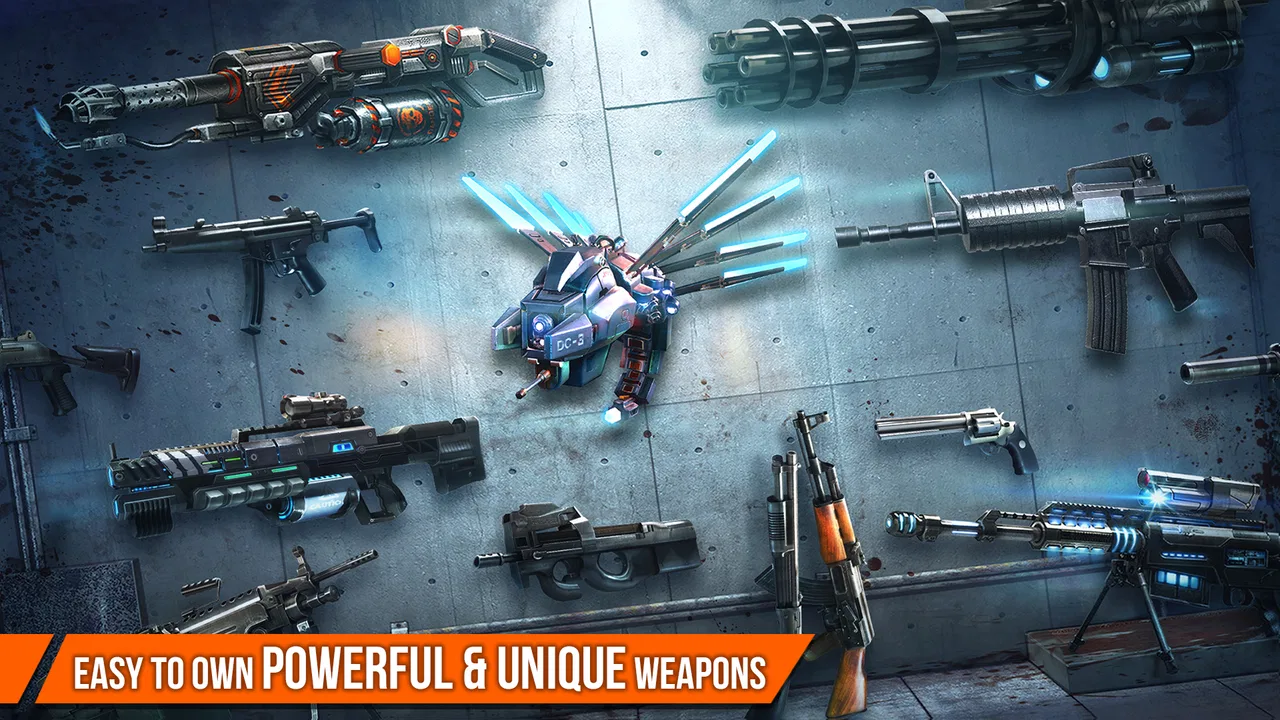
- Large weapon selection lets you experiment with different combat styles.
- Short missions suit quick gaming sessions on mobile devices.
- Regular rewards help unlock upgrades without requiring immediate purchases.
Cons
- Frequent shooting can become repetitive after extended play sessions.
- Energy or progression limits may interrupt longer gaming sessions.
- Many weapon upgrades and resources encourage in-app purchases.
- Graphics and effects may cause battery drain on older devices.
- The story is fairly simple and offers limited character development.

Dead Target: Offline Games 3D
Gallery